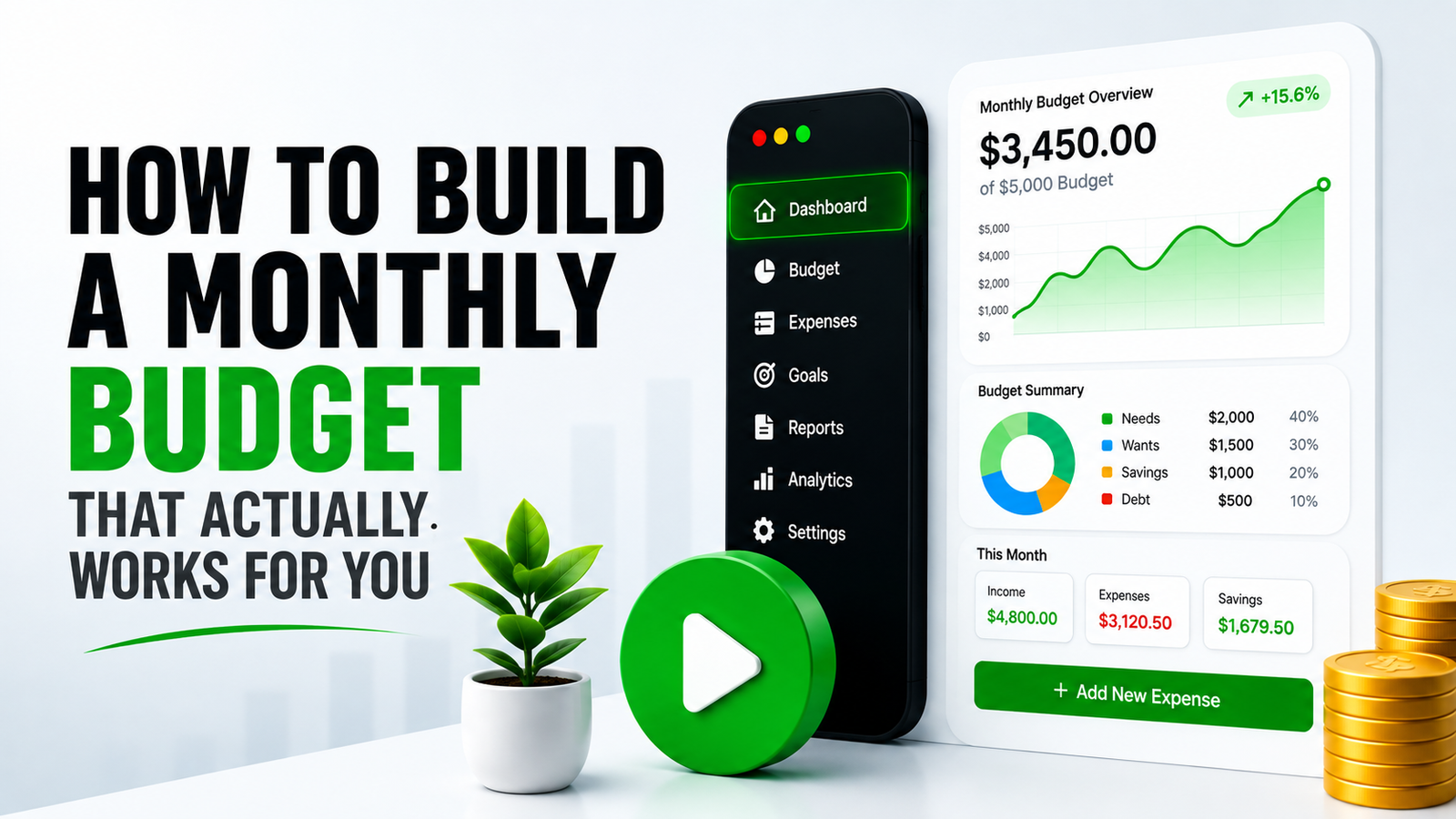
Most people have tried budgeting at least once. They downloaded an app, made a spreadsheet, or wrote numbers on a piece of paper and then stopped after two weeks. The problem was never motivation. The problem was the method. Most budgets fail because they are built around restriction rather than intention. A budget that tells you to stop spending on things you enjoy is not a budget you will actually follow. A budget built around your real life is something entirely different.
Personal finance does not require a finance degree. It does not require a high income. It does not even require a lot of time. What it requires is a system that fits your actual situation and a clear understanding of where your money is going before you decide where it should go. That clarity alone changes everything.
This article walks through how to build a monthly budget that holds up past the first week, why most budgets collapse, what the most effective frameworks look like, and how to adapt the process for different income types — whether you earn a fixed salary, freelance income, or something irregular and unpredictable.
Why Most Budgets Fail in the First Place
Before building something that works, it helps to understand what breaks most attempts. The most common reasons people abandon budgets are not about discipline. They are about design.
The first issue is using last month's ideal spending as this month's target. That never works. If you spent $400 on food last month and you set a $200 target this month with no structural change, you will hit $350 and feel like you failed — even though you actually improved significantly.
The second issue is treating every category as equally flexible. Rent is not negotiable. Electricity is not negotiable. The gym membership you have used twice this year is very negotiable. Budgets that lump fixed and variable costs together make it impossible to see where the actual room is.
The third issue is building the budget without accounting for irregular expenses. Annual subscriptions, car maintenance, phone replacements, medical bills, travel costs — these are predictable in the sense that they will happen, even if the exact timing varies. A budget that ignores them will be broken by them every single time.
The Framework That Actually Works
The most effective personal budgeting framework for most people is a variation of the 50/30/20 model, applied with more specificity than the standard explanation usually provides.
- Start with your real take-home number Not gross income. Not what your contract says. What actually arrives in your account after tax, deductions, and any automatic transfers. That is your starting point for everything.
- List every fixed commitment first Rent or mortgage, loan repayments, insurance premiums, subscriptions you will not cancel. These come off the top before anything else. What remains is your actual discretionary income.
- Assign variable categories with realistic targets Food, transport, clothing, entertainment. Look at three months of actual spending in each category and set a target that is 10 to 15 percent below your average — not 50 percent. That is achievable. Fifty percent is a fantasy.
- Build your irregular expense fund Add up everything that will hit you across the next 12 months that is not monthly. Divide by 12 and set that amount aside each month. When the car needs a service, the money is already there.
- Protect your savings allocation first Pay yourself before anything discretionary. Even if it is a small amount, automating a transfer on payday means it happens before you have a chance to redirect it elsewhere.
Understanding the Numbers
| Category | Type | Typical Share | First Target |
|---|---|---|---|
| Housing | Fixed | 25–35% | Do not exceed 35% |
| Food and groceries | Variable | 10–15% | Track before cutting |
| Transport | Mixed | 8–12% | Review every 6 months |
| Savings | Protected | 10–20% | Start with 5% minimum |
| Entertainment | Flexible | 5–10% | First area to adjust |
Budgeting for Irregular Income
Everything above assumes you receive roughly the same amount each month. Many people do not. Freelancers, gig workers, commission-based earners, and anyone with a variable income source need a slightly different approach.
The most effective method for variable income is the baseline budget. You calculate the minimum monthly income you can realistically expect in a bad month and you build your entire fixed expense structure around that number. In good months, the surplus goes to a buffer account first, savings second, and discretionary last. This means your lifestyle expenses never increase automatically just because you had a strong month.
The buffer account is the key piece that most variable earners skip. It should hold at least two to three months of baseline expenses. When a slow month hits, you draw from the buffer rather than going into debt. When income is strong, you rebuild it. This removes the emotional cycle of feeling wealthy one month and anxious the next.
The Tools That Help the Most
You do not need an expensive app or complex software. The best budgeting tool is the one you will actually open regularly. For some people that is a notes app. For others it is a spreadsheet. For others it is a dedicated finance app that links to their bank.
What matters more than the tool is the habit of reviewing. Once a week, spend ten minutes checking where you are against your plan — not to judge yourself, but to notice patterns. That weekly ten minutes is worth more than any app feature or advanced budget category.
Common Questions Answered
Frequently Asked
- Q How long does it take to see results? Most people notice a real difference in their financial picture within 60 to 90 days of consistent budgeting. The first month is about getting accurate data. The second is about making adjustments. The third is where it starts to feel natural.
- Q What if I overspend in a category? It happens to everyone. The response is not guilt. The response is to look at why it happened and whether the category target was realistic. A budget that requires perfection to work is a budget that will not work.
- Q Should couples budget together? Yes, but it takes honesty about both income and spending habits. The most effective approach is one shared budget with individual discretionary allowances built in. Neither person should feel like they need permission to spend on personal things within a reasonable limit.
- Q Is budgeting worth it on a low income? Especially on a low income. When margins are thin, knowing exactly where every dollar goes is not optional — it is essential. The lower the income, the higher the return on knowing your numbers precisely.
- Q How do I handle unexpected expenses? That is what the irregular expense fund and the buffer account are for. If you do not have those yet, start with a small emergency fund of even one month's essential expenses before saving aggressively for anything else.
I had tried budgeting three times before and quit each time after about a month. The difference this time was that I stopped trying to cut everything and started just tracking everything first. Once I actually saw where the money was going, the adjustments became obvious on their own.
Sara, 31, marketing professionalPersonal finance is not about being perfect with money. It is about being intentional with it. A budget is just a plan for your income before it arrives. The more honest you are when you build that plan, the more useful it becomes. Start simple, stay consistent, and adjust as your life changes. That is the entire system.
Your Video Habits
Help us understand how you spend time online so we can show you the most relevant earning strategy.