You Have Completed All Five Steps
Here is exactly what you get when you join ApKruf today.
What Members Say
Most people assume their health insurance covers them comprehensively. They pay their premiums, they carry their card, and they assume that when something goes wrong the policy will handle it. Then the medical bill arrives and a significant portion of it is labeled as the patient's responsibility, and the conversation about what the policy actually covers begins in the worst possible moment.
Health insurance is one of the most complex financial products most people will ever buy and it is almost always purchased under time pressure — through an employer during a short enrollment window, or through a marketplace with confusing comparisons. The result is that most people have coverage they do not fully understand until they need it.
Understanding your health insurance before you need it is not optional. It is the difference between a medical event that is managed and a medical event that becomes a financial crisis.
The Key Terms That Actually Matter
Before addressing what is and is not covered, it helps to be clear on the terms that determine how much you pay in any given situation. These four terms control your actual out-of-pocket costs and most people could not define them accurately for the policy they are currently enrolled in.
- Premium What you pay every month to maintain coverage, whether you use the insurance or not. This is the visible cost most people focus on when choosing a plan. It is important but it is not the only cost that matters.
- Deductible The amount you pay out of pocket before your insurance starts contributing to most costs. A $3,000 deductible means you pay the first $3,000 of covered services yourself each year before the insurer shares costs. High-deductible plans have lower premiums but significantly higher financial exposure if you actually need care.
- Copay and Coinsurance After the deductible, your share of each service. A copay is a fixed amount per visit. Coinsurance is a percentage — typically 20 to 30 percent — of each covered service cost that you continue paying until you reach the out-of-pocket maximum.
- Out-of-Pocket Maximum The most you will pay in a single year for covered services. After this amount, the insurer pays 100 percent of covered services for the rest of the year. This is the actual financial protection ceiling your policy provides and the most important number to know if you have a major health event.
What Standard Policies Typically Do Not Cover
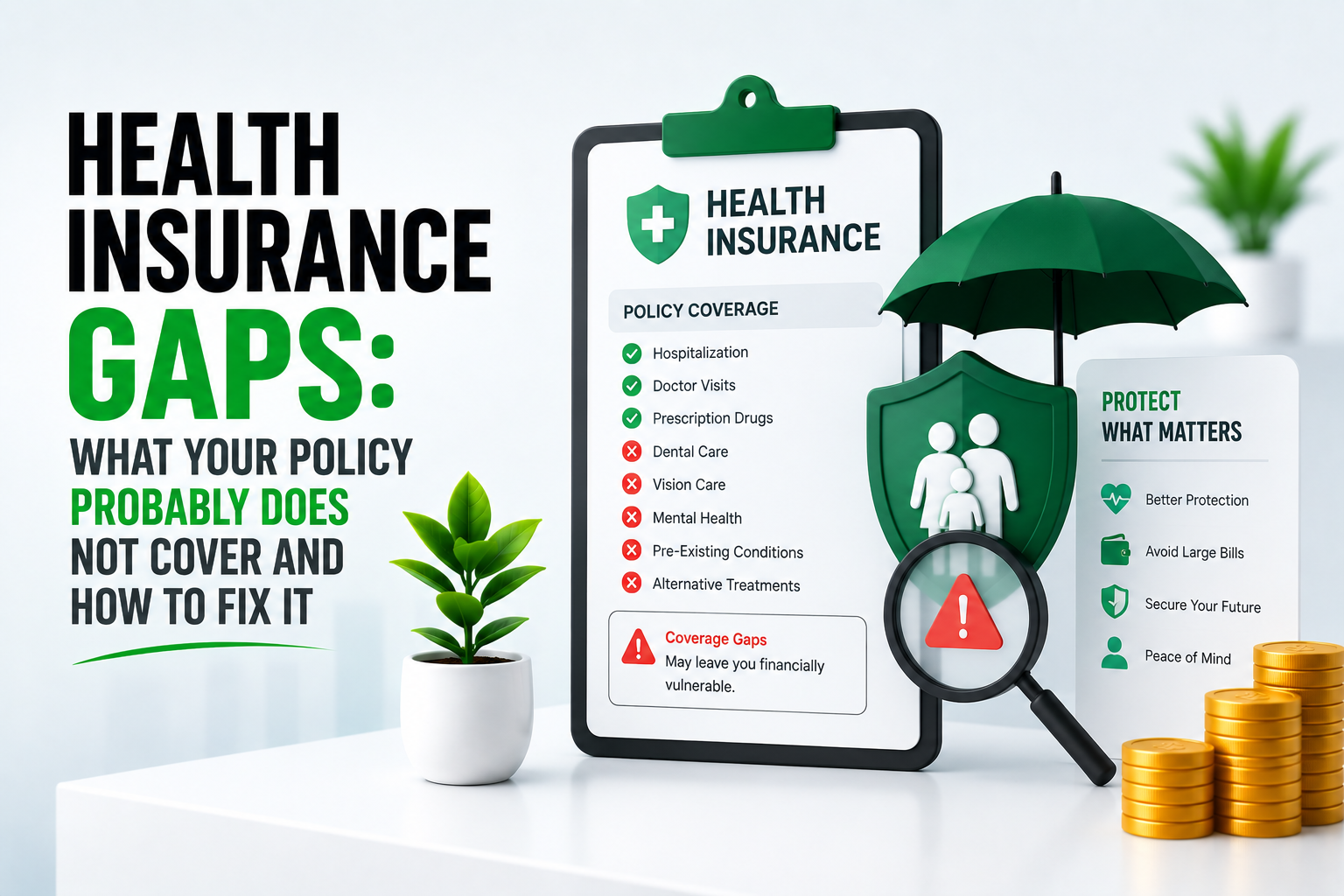
Even comprehensive health insurance has significant gaps. These are the most common areas where people discover their coverage does not extend as far as they assumed.
| Service Type | Typically Covered | Typically Excluded | Solution |
|---|---|---|---|
| Dental care | Emergencies (sometimes) | Routine, cosmetic | Separate dental plan |
| Vision | Medical eye conditions | Glasses, contacts, exams | Vision add-on plan |
| Mental health | Improving in many plans | Long-term therapy limits | Verify session limits |
| Long-term care | Short-term rehab | Extended nursing care | Separate LTC policy |
| Elective procedures | Medically necessary only | Most elective treatments | Self-fund or supplement |
The Network Problem Nobody Warns You About
One of the most significant and least discussed sources of unexpected medical costs is out-of-network care. When you receive care from a provider who is not contracted with your insurance network, the insurer's standard coverage rules may not apply at all.
This happens more often than people expect. You choose an in-network hospital but the specialist who treats you there is out of network. You visit an in-network emergency room but the anesthesiologist on duty is not contracted with your insurer. The bills that result from these situations can be substantial.
How to Identify and Close Your Coverage Gaps
Gap Assessment Checklist
- ✓ Know your out-of-pocket maximum This is the most you can lose in a bad year for covered services. Make sure you could cover this amount from savings or income without going into debt.
- ✓ Confirm dental and vision coverage separately Most health plans do not include these. If your employer offers add-ons, evaluate them against standalone plans.
- ✓ Understand mental health session limits Plans vary widely. If you use or expect to use mental health services, verify the annual session limits and any step-therapy requirements.
- ✓ Check your prescriptions are covered Every plan has a formulary — a list of covered drugs. If you take regular medications, confirm they are on the formulary before enrolling, not after.
- ✓ Verify your regular providers are in-network Before each plan year, confirm that your primary care physician, specialists, and preferred hospital are still in your plan's network. Networks change annually.
The Case for Supplemental Coverage
Supplemental insurance is not a replacement for primary health coverage. It is an addition designed to cover the costs your primary plan does not. The most commonly useful types are critical illness coverage, which pays a lump sum upon diagnosis of specified serious conditions, and hospital indemnity coverage, which pays a fixed daily amount for each day of hospitalization regardless of what your primary plan covers.
I thought I had good insurance through work until I had a procedure that hit my deductible and then the 20 percent coinsurance on top. The bill was significant. Now I read the summary of benefits every single year during open enrollment instead of just clicking through the same plan.
Jennifer, 41, teacherHealth insurance is not a guarantee that medical costs will be covered. It is a contract with specific terms, limits, and exclusions that you are responsible for understanding. The people who come through medical events without significant financial damage are not necessarily those with the most expensive plans. They are the ones who understood their coverage before they needed to use it.
Join ApKruf
Free to Join. Start Today.
Your account is ready in under two minutes. No payment required. No documents. Your task list appears the moment you sign up.
Apply Now — Create Your Account →